

FOR IMMEDIATE RELEASE
At the Truth Commission’s eighth public truth-telling session on Friday, Reggina Villegas testified that Payatas police tortured her partner, Angelito Luciano, and forced him to plant guns and drugs on the bodies of “drug war” victims. He was killed after a police operation went wrong.
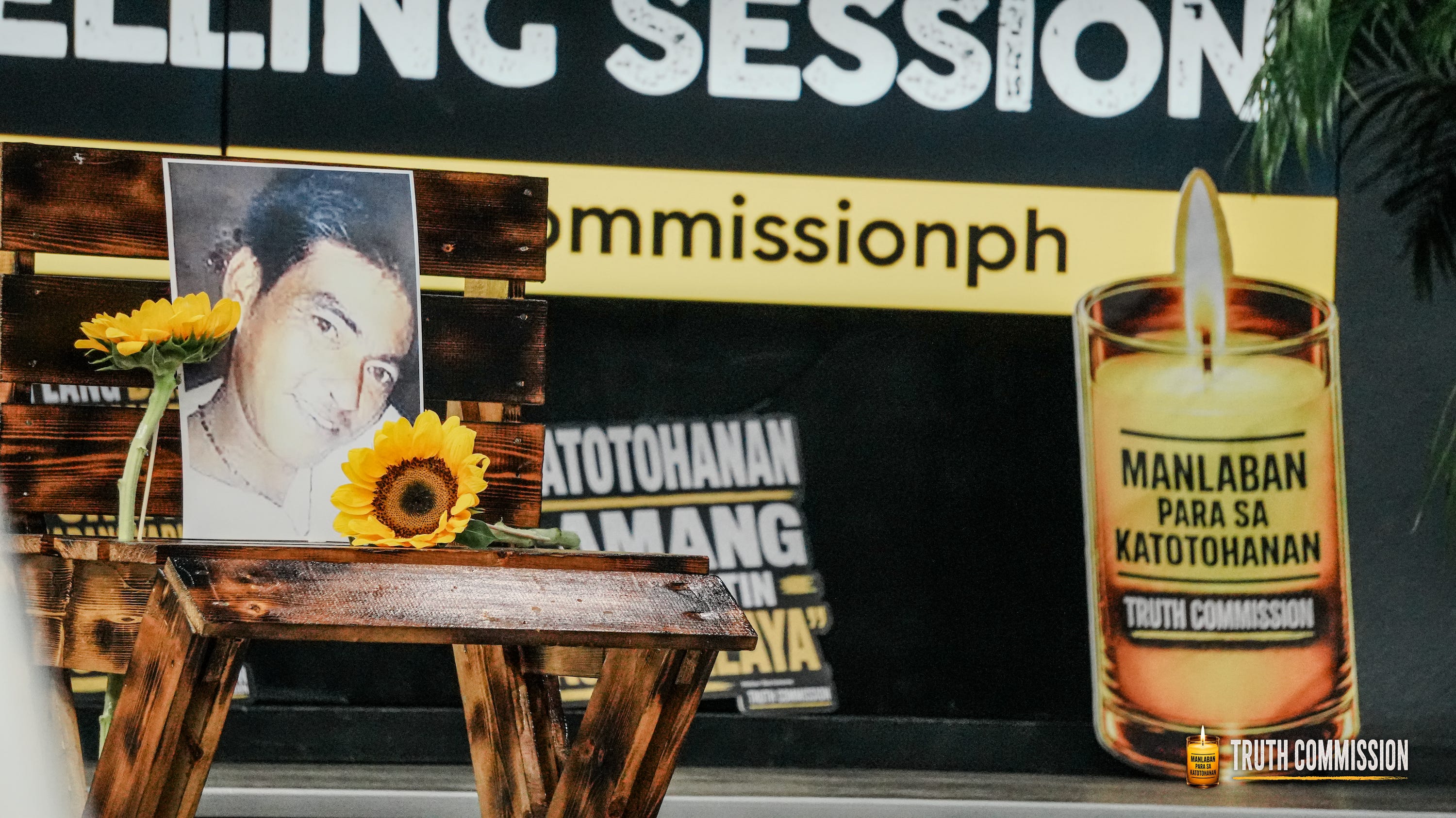
MANILA, Nov. 20, 2026 — On the night of Nov. 30, 2016, Reggina Villegas prayed inside a speeding tricycle as it raced toward Visayas Street in Payatas B, Quezon City.
“Pinagdadasal ko po na sana daplis lang, daplis lang ang tama niya,” she recalled. “Kaso pagbaba ko ng tricycle, nakita ko siyang nakahiga na, puro dugo.”
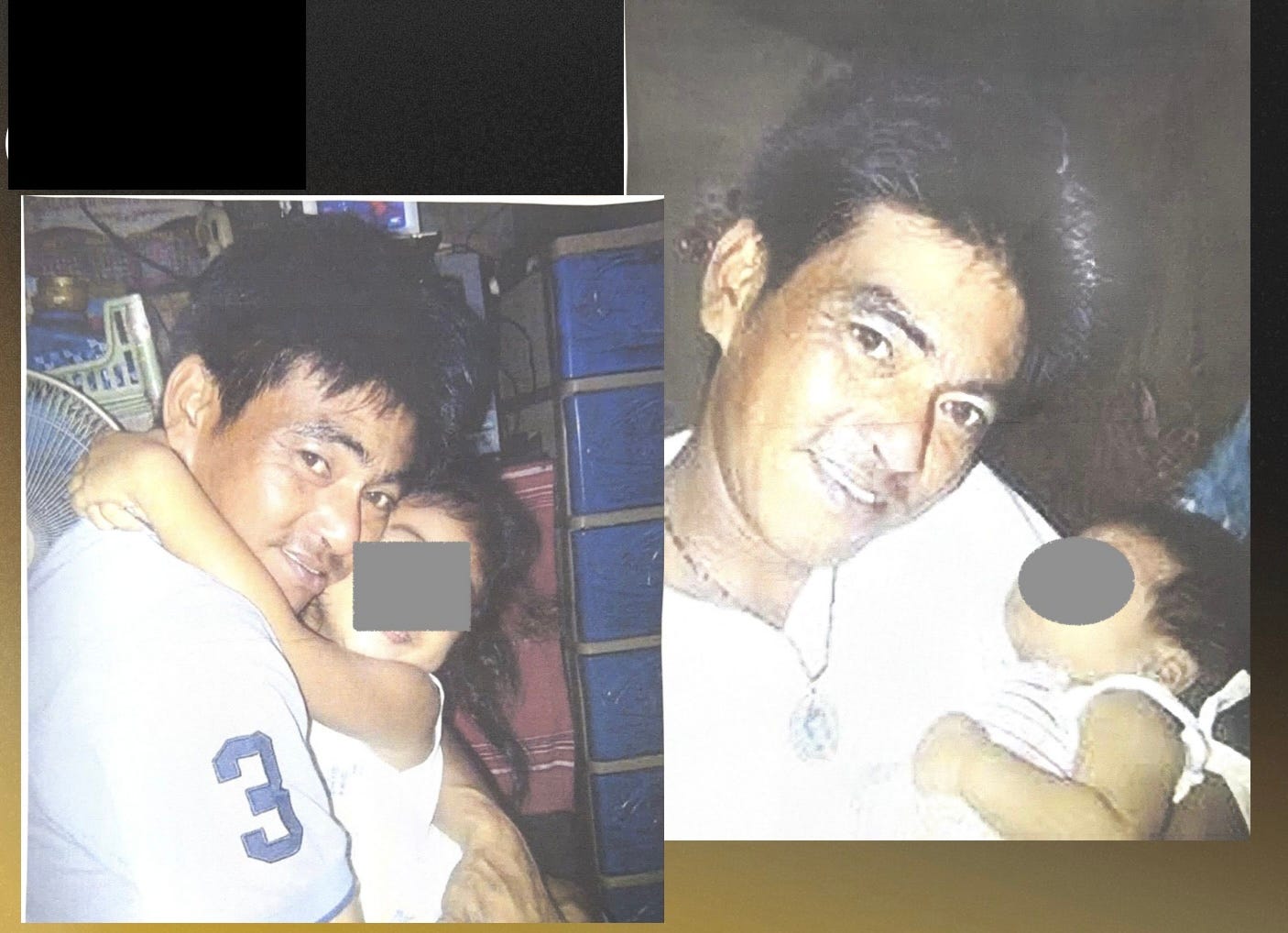
Her live-in partner, Angelito Luciano, 41, lay dead on the pavement. Luciano, a former driver and bodyguard who later became a Barangay Public Safety Officer, was the father of Villegas’s two children, then 6 and 2.
A uniformed police officer stood over the body.
“May napansin po akong isa doon na lalaki, naka-uniform po siya, pulis po siya na nakatingin kay Lito. Nakangiti lang po, nakakainsultong ngiti,” Villegas told the commissioners. “Napaisip po ako bakit ganun siya tumingin, tapos parang masaya pa siyang namatay ‘yung kinakasama ko.”
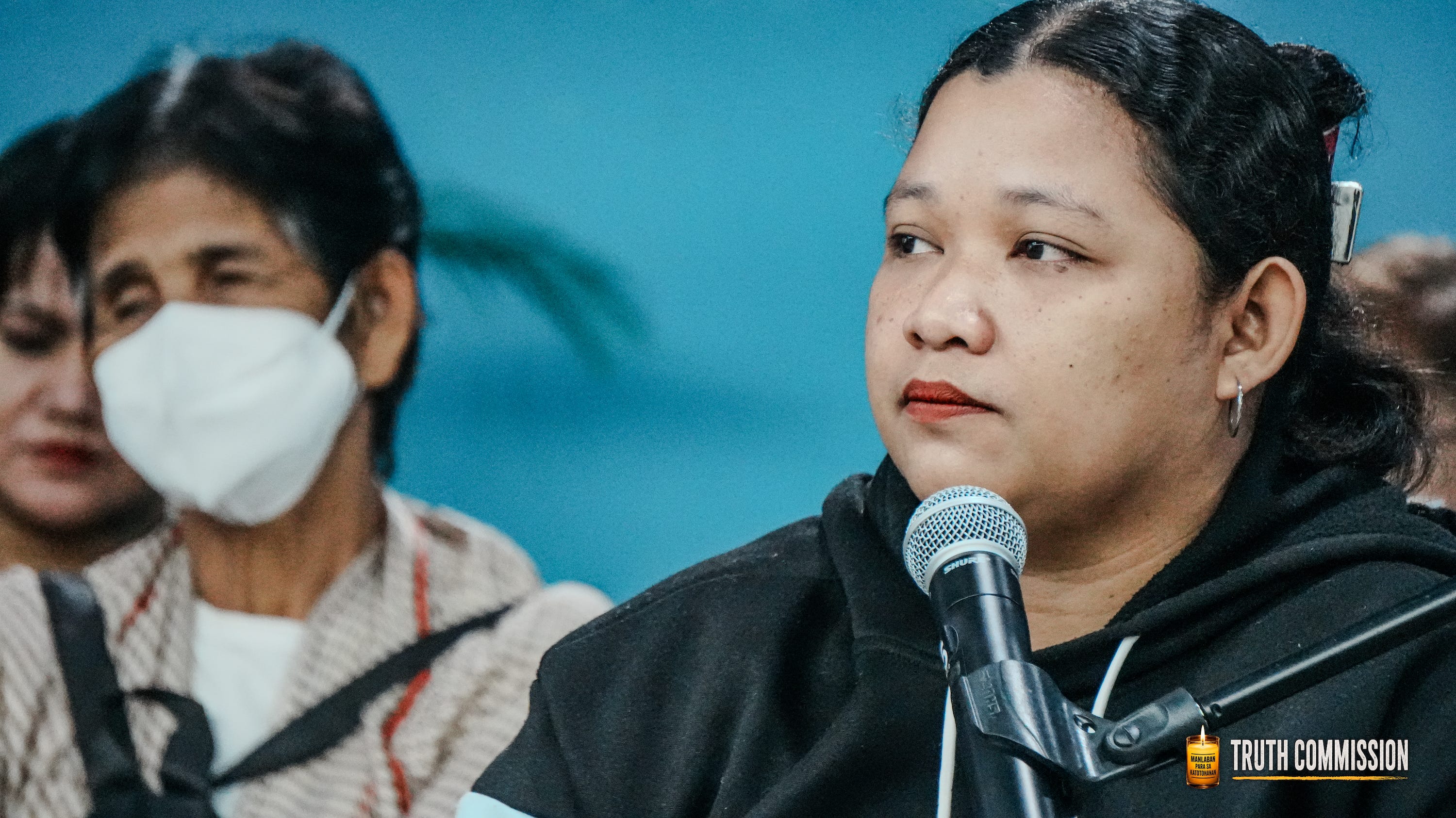
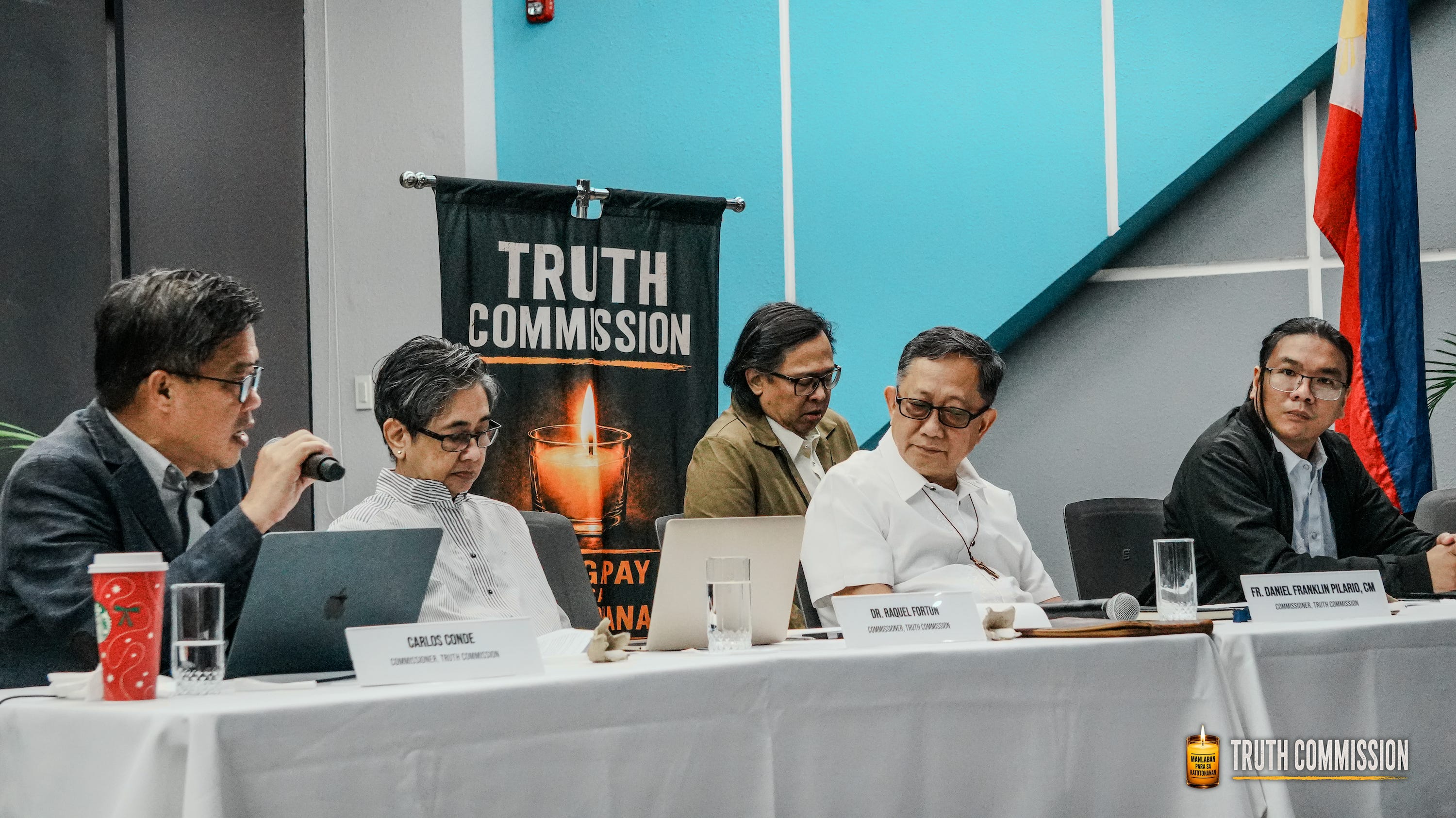
Villegas gave her sworn statement at the Co Po Ty Auditorium of Adamson University during the Truth Commission’s eighth public truth-telling session. She described how police tortured Luciano and turned him into an informant, or “asset,” who staged crime scenes during former President Rodrigo Duterte’s “war on drugs.”
From Bodyguard to Detainee at Station 6
In Payatas B, many people knew Luciano as Ka Lito. Before he joined the barangay tanod, he spent years as the driver and bodyguard of the local barangay captain. His trouble began in October 2016, a month before his death. Police arrested him and said he had fired the gun issued to him for his security work.
Officers held Luciano at Police Station 6 in Quezon City for a week. They filed no charges and never brought him before a judge. When Villegas was finally allowed a short visit, she saw injuries on his face and head.
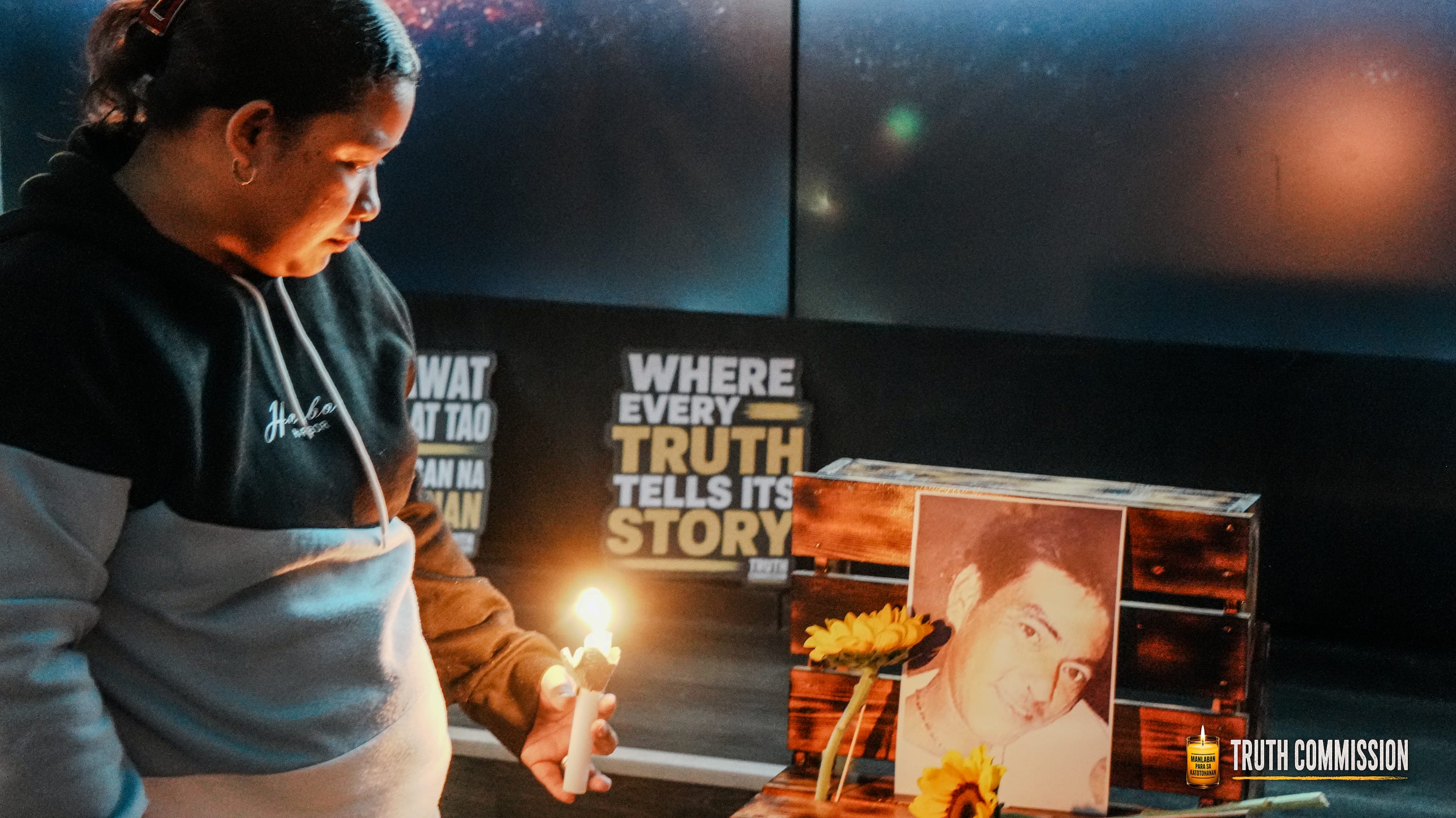
“Nakitaan ko po siya ng may sugat po dito sa banda rito (pisngi), may mga gasgas, tapos ‘yung sa bandang ulo niya parang natanggalan ng buhok,” she recalled. She was describing a bald patch where his hair had been pulled out.
Police released him late one night. Only at home did Luciano tell her what had happened.
“Ma, kinuryente ako, tinorture ako doon,” he told her.
Villegas checked his body. She found a fresh, bleeding wound on his left big toe, where the nail appeared to have been pried up.
The ‘Blue Book’
The release came with conditions. Police took away his bodyguard firearm, reassigned him as a BPSO tanod and gave him a new stainless-steel handgun. Officers told him he had “work to do.”
Police began showing up at the couple’s home at all hours and taking Luciano on night patrols that started at 10 p.m. They gave him a plain blue notebook, which they called the “blue book.” It listed neighborhood residents suspected of drug involvement, and he was told to watch them.
On the night sweeps, his job soon went beyond watching. He began staging the scenes of police killings.
“Pagmasdan mo ‘yung mga pinapanood niyo sa balita,” Luciano told Villegas one night before they went to sleep. “‘Di ba laging sinasabi, nanlaban daw po ‘yung mga napatay, tapos may mga drugs, may baril? Ang totoo, nilalagyan daw po ‘yun ng baril at tinataniman po ng drugs para sabihin na nanlaban kaya raw po binaril,” Villegas said, recalling his words.
“Pag natapos nila tirahin, utusan daw po siyang maglagay ng baril doon sa bangkay at lalagyan po ng sachet po ng drugs para daw po maisip ng mga tao na naglaban.” Luciano told her that officers routinely handed him .38-caliber revolvers and sachets of shabu to leave beside the dead.
Random Killings and a Plan to Leave
Once, Luciano saw officers shoot a man only because of how he looked.
“Meron daw biglang binaril ‘yung pulis na nakita lang daw po na payat lang na tao po. Bigla lang daw po binaril,” Villegas recalled. “Wala daw po [sa blue book], kasi payat lang po. Ang sabi sa akin ni Lito, hindi naman daw gumagamit ‘yun, payat lang daw po talaga siya. Kaya natakot siya.”
Luciano was frightened by what he called the “walang habas na pagpatay,” or indiscriminate killing, by men Villegas identified as members of the Davao Death Squad. He promised her they would leave Payatas together.
“Matatapos ko lang itong pinapatrabaho sa akin ng pulis at lalayo tayo.”
‘Iba ‘Yung Nabira’
On Nov. 30, 2016, Luciano came home around 6 p.m. to shower and change. In their bedroom, he showed Villegas a text message on his phone from a contact saved as “Pulis.”
It read: “Tol, pakisabi kapatid ‘yan.”
Luciano explained that a police operation earlier that evening had gone wrong. “Ma, iba ‘yung nabira,” he said. The police had shot the wrong man, and they were trying to cover it up by claiming the victim was an associate, a “brother.”
Around 7 p.m., before leaving for services at his Iglesia ni Cristo chapel, Luciano asked her to pack him dinner. “Ma, pagbaon mo ako ng pagkain at marami kaming kakain. Manok lang ‘yung ipabaon mo sa akin kasi merong hindi kakain ng baboy,” he said. She packed him adobo. As he left, he told her: “Ma, huwag kang makakalimot. Lagi kang magdadasal.”

At 9 p.m., a female barangay worker ran to their house to say Luciano had been shot on Visayas Street.
Witnesses at a nearby wake told Villegas what they saw. Luciano was sitting on his motorcycle when a man came up behind him and called out, “Ka Lito, pasanla ng stainless.” Villegas believes this referred to the stainless-steel gun police had given him.
The gunman shot Luciano in the head. After he fell, the man took Luciano’s own gun, shot him several more times with it and walked away.
Left Alone, Then Driven Into Hiding
After the killing, the barangay leaders Luciano had served as a bodyguard and safety officer offered the family no help. Each time Villegas went to the barangay hall, the captain was never there.
Fr. Danny Pilario, a convener of the Truth Commission, said at the hearing that during the “drug war,” Payatas barangay officials routinely kept away from the families of people killed. Out of fear and political pressure, they withheld even basic services such as funeral tents and electrical hookups.
Neighbors warned Villegas not to hold the wake in Payatas. “May nakapagsabi po sa akin na huwag niyo diyan ibuburol kasi magkakagulo,” she said. She moved it to Marikina. Some neighbors wanted to come but stayed away. “May gustong pumunta kaso natatakot.”
Days later, neighbors told her that four masked men on two motorcycles had been circling her house at night and shining flashlights through the windows.
Afraid for her children, Villegas took her brother-in-law’s advice not to file a case. “Baka katrabaho niya lang din ‘yan, ‘yung nag-utos sa kanya ang tumumba sa kanya. Kaya manahimik na lang tayo para sa dalawang anak ninyong dalawa.”
A Strange Death Certificate
Dr. Raquel Fortun, a forensic pathologist and Truth Commission member, reviewed the thin case file. She found serious problems with Luciano’s death record.
Dr. Fortun said the certificate used a form dating to the 1990s and was stamped “For burial purposes only.” It listed the cause of death as “Perforating wound, multiple, 5 minutes,” then again as “Gunshot wound, multiple, 5 minutes.” Dr. Fortun called the five-minute survival time absurd. A gunshot to the head, she said, would have killed him at once.
The certificate did not classify the death as a homicide. Instead, someone checked “Death by non-natural causes” under “Others.” The certifying doctor signed with an illegible scrawl above the words “Payatas BHO.”
No autopsy was done. Investigators never reconstructed the crime scene, and no ballistics tests were run on the weapons.
“Lahat ‘yan masasagot sana kung ginawan ng imbestigasyon... But the thing is, trabaho ‘yan ng estado,” Dr. Fortun said. “Automatic ‘yan dapat, hindi kayo.”
Ten Years Without Answers
Ten years later, no one has been charged in Luciano’s death. When Villegas recently asked the Quezon City police for their investigation report, she was turned down. Police told her the file was “confidential” because a decade had passed.
Luciano’s two phones, which held the messages from the contact saved as “Pulis,” are still in police custody. Villegas said cash that police crime scene officers counted at the scene was returned to her with money missing. Barangay officials said the security cameras on Visayas Street were not working that night.
For more than two years, grief and fear kept Villegas from working. She eventually took a job as a security guard to support her children. When one of them asked why their father was killed if he was a good man, she had no answer.
“Nagtanong sa akin ‘yung isa: ‘Mama, mabait naman pala si Papa, ang daming nagsasabing mabait. Bakit siya pinatay?’ Wala po akong naisagot doon hanggang ngayon.”
Dr. Fortun spoke about what families are left to bear on their own. “Ewan ko. I hate the word resilient, but that is exactly what we’re doing right now.”
The Truth Commission said its public sessions do not replace court proceedings. But recording the accounts of Luciano and others creates a lasting public record and gives their families a place to demand accountability. (Truth Commission)